Level Up with ESRB: Talkin’ Ratings – Family Game Time
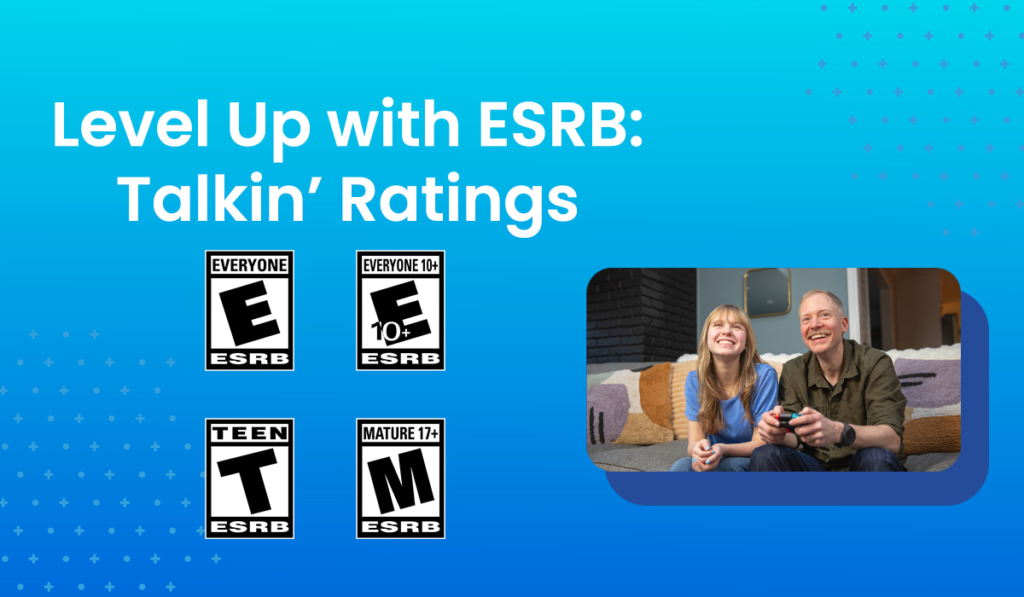
Whether through board games, pen-and-paper RPGs, or video games – gaming has always been a part of our household. Like most families, we also watch movies and television together, but the interactive nature of playing video games is something that we truly cherish.
I fondly remember when The Legend of Zelda: Breath of the Wild first came out, and both of my daughters were old enough to play. The original game, The Legend of Zelda, was one of the first games I had when I was around their age and it was nice to share that with them. Even though it’s a single-player game, the three of us sat on the couch battling monsters and trying to solve puzzles together. We took turns trying different strategies, while the other two shouted out suggestions. We were talking, laughing, using our brains, and practicing how to share.
But not all games are appropriate for kids. When they were younger, they were very curious about a different game I was playing that also involved riding around on horseback. That game was Skyrim. Skyrim is rated M for Mature and has plenty of content that isn’t appropriate for young kids. I did, however, let my oldest sit on my lap and ride around on the horse. If she ran into a combat situation, we paused the game and I explained that some parts weren’t for her before she would scoot off, somewhat disappointed that it wasn’t just a horse-riding simulator.
From their very earliest years, they knew that some games were for them – and some weren’t (yet). They also knew that their father was not only making that determination as their dad, but also was behind the black-and-white letter that was on the front of the game’s box.
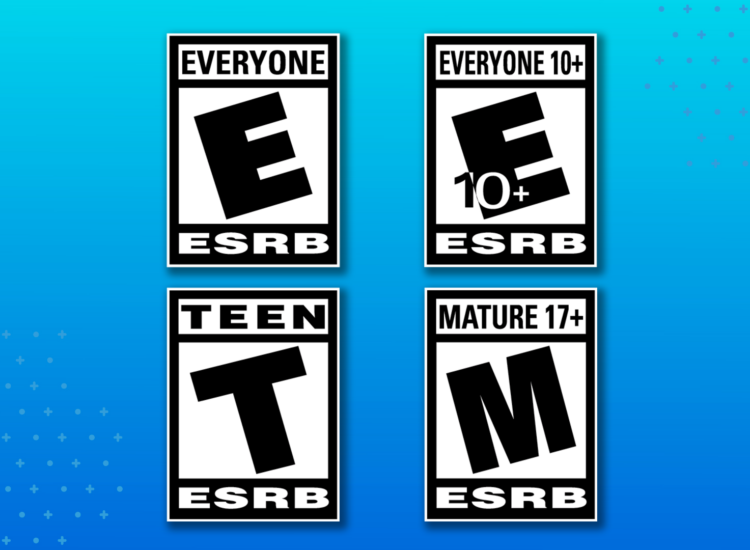
What Makes Up an ESRB Rating?
Most parents’ jobs don’t involve evaluating video games for age appropriateness. But that is precisely what I do for a living at the ESRB as its Senior Vice President of Ratings. ESRB assigns age and content rating information to video games and apps to help parents decide which products are appropriate for their kids.

There are three parts to the system:
Rating Category
The Rating Category suggests whether a game may be appropriate for a certain age group. That doesn’t necessarily mean the game is designed or intended for that age group — just that the content is suitable. There are plenty of E-rated games that might still be too challenging or complex for a young child.
Content Descriptors
These provide more detail about what players will encounter in a game and ultimately what content led to the Rating Category assignment. In the case of Breath of the Wild, one of the Descriptors is Fantasy Violence. That means the game includes combat or action sequences that aren’t realistic or something you’d encounter in everyday life — such as battling a rock monster rather than a human foe. On the other hand, Skyrim has a Descriptor for Intense Violence signaling to parents that the violence is more graphic and/or realistic looking.
Interactive Elements
While not relevant to all games, Interactive Elements inform parents about non-content features that may be important to know before their child plays a game. For example, if a game allows players to communicate with others, you’ll see “Users Interact.” If it offers in-game spending, you’ll see “In-Game Purchases” or “In-Game Purchases (Includes Random Items).” These notices help families understand the kinds of interactions or transactions a game may include, allowing parents to plan ahead, discuss household rules around video games, and set parental controls to back them up.
For physical, boxed games, ESRB also provides Rating Summaries — short paragraphs that go a step deeper to describe in more detail the content of the game and the context in which it is presented to the player. These are especially helpful for parents who want more insight into why a game received its specific Rating Category and Content Descriptors.
Staying Involved
Sharing time in front of the TV with a controller in hand has created some of our most memorable family moments. Lately, we’ve been playing through The Legend of Zelda: Tears of the Kingdom (the sequel to Breath of the Wild). Their hand-eye coordination has now surpassed my own. They are more likely to take the controller away from me instead of relying on me to get them through. They’re growing up.
Playing together has helped us stay connected and maintain open communication about games — what they’re about, why we enjoy them, and what’s appropriate for different ages. When parents understand what their kids love about games, it becomes easier to set household rules around playtime, online interactions, and spending.
For example, my younger daughter has been increasingly interested in Roblox over the past few years. Talking with her about why some of the experiences on Roblox resonated with her helped us talk about appropriate online interactions with others, what’s off limits, and more. For more information on establishing household rules and starting constructive conversations around video games visit ESRB’s Family Gaming Guide.
As mentioned, if you’re looking for a way to reinforce household rules, nearly every device that can play games — from consoles to smartphones — includes built-in parental controls.
These tools make it simple to:
- Manage what your kids can play, based on the ESRB-assigned age rating.
- Set time limits and control when games can be played.
- Restrict with whom they can communicate.
- Limit or block the ability to make in-game purchases.
Visit ParentalTools.org for step-by-step parental controls guides to help parents get started setting controls.
Ultimately, playing games together led to a lot of quality time for me with my daughters, and it’s one of the best ways to connect as a family.