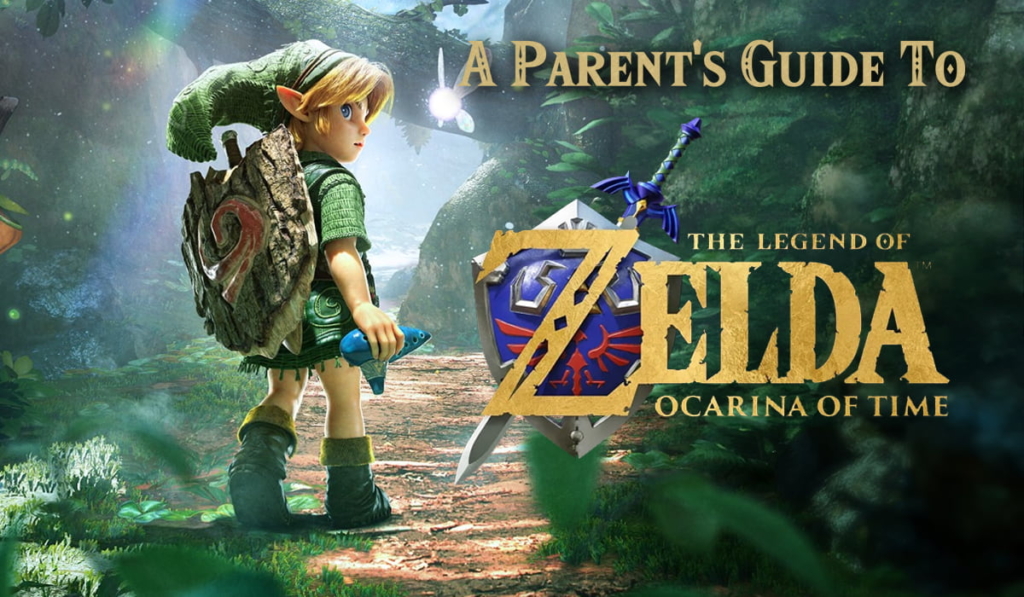
A Parent’s Guide to The Legend of Zelda: Ocarina of Time
The Legend of Zelda: Ocarina of Time at a Glance
- ESRB Rating: E10+ (Everyone 10+)
- Content Descriptors: Animated Blood, Fantasy Violence
- Interactive Elements: None
- Platform: Nintendo Switch 2
- Release date: November 5, 2026
- Players: Single player
- Price: $69.99 physical / $59.99 digital
Ocarina of Time is rated E10+ by ESRB, so it is likely appropriate for kids 10 and up. Combat is cartoonish, and defeated enemies may give off green or purple blood. Younger players may find some of the puzzles challenging.
Like many my age, I have a long history with The Legend of Zelda: Ocarina of Time. I remember sitting in my brother’s friend’s basement the first time I saw the game sometime in 1999. My brother and his friend played while convincing me it was too scary to watch. I suspect they just wanted me to leave them alone (and I did). But something about it stuck with me for years.
I later played the original Ocarina of Time, after borrowing it from a friend in middle school. Then I played it again on the GameCube. And again on the Nintendo 3DS when The Legend of Zelda: Ocarina of Time 3D came out. I may have squeezed another playthrough or two in there over the years, too.
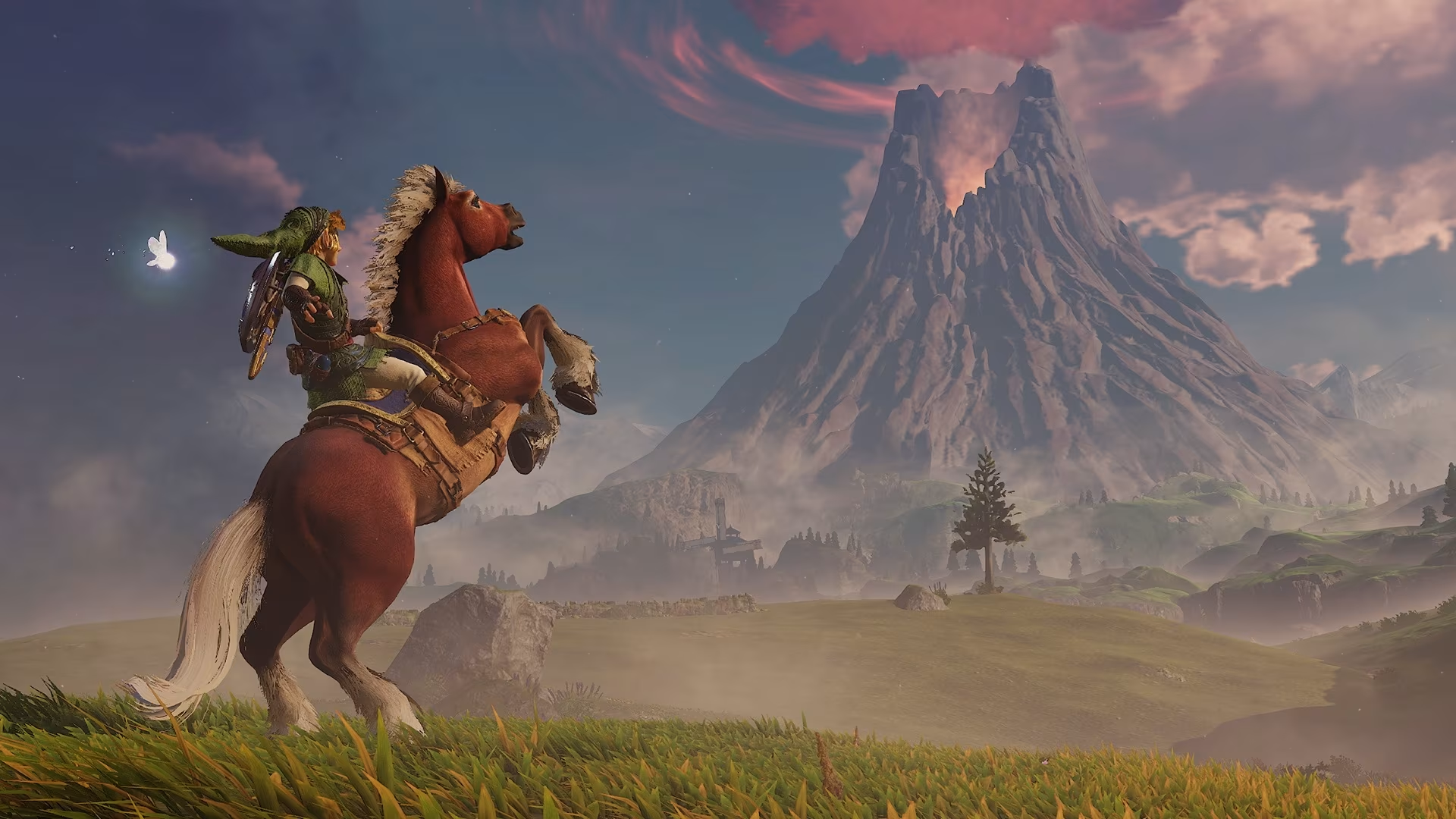
With a new remake on the Nintendo Switch 2, Ocarina of Time comes into my hands again.
One question remains: Is it appropriate for your kids?
What is The Legend of Zelda: Ocarina of Time Rated?
The Legend of Zelda: Ocarina of Time is rated E10+ for Everyone 10+, with Content Descriptors for Animated Blood and Fantasy Violence. No Interactive Elements are assigned to Ocarina of Time, meaning the game does not offer any in-game purchases or online play.
According to the Rating Summary, “Battles are accompanied by impact sounds, colorful light effects, and cries of pain. Certain enemies may emit a green or purple blood effect when defeated.” Players will also use a variety of weapons to battle foes, such as “swords, shields, arrows, and magic spells.”
The rating indicates that Ocarina of Time is likely appropriate for your kids aged 10 and older from a content perspective. But ESRB ratings are intended to give you an idea of age-appropriateness, not intended audience. Zelda games can be challenging, especially when it comes to the puzzles.
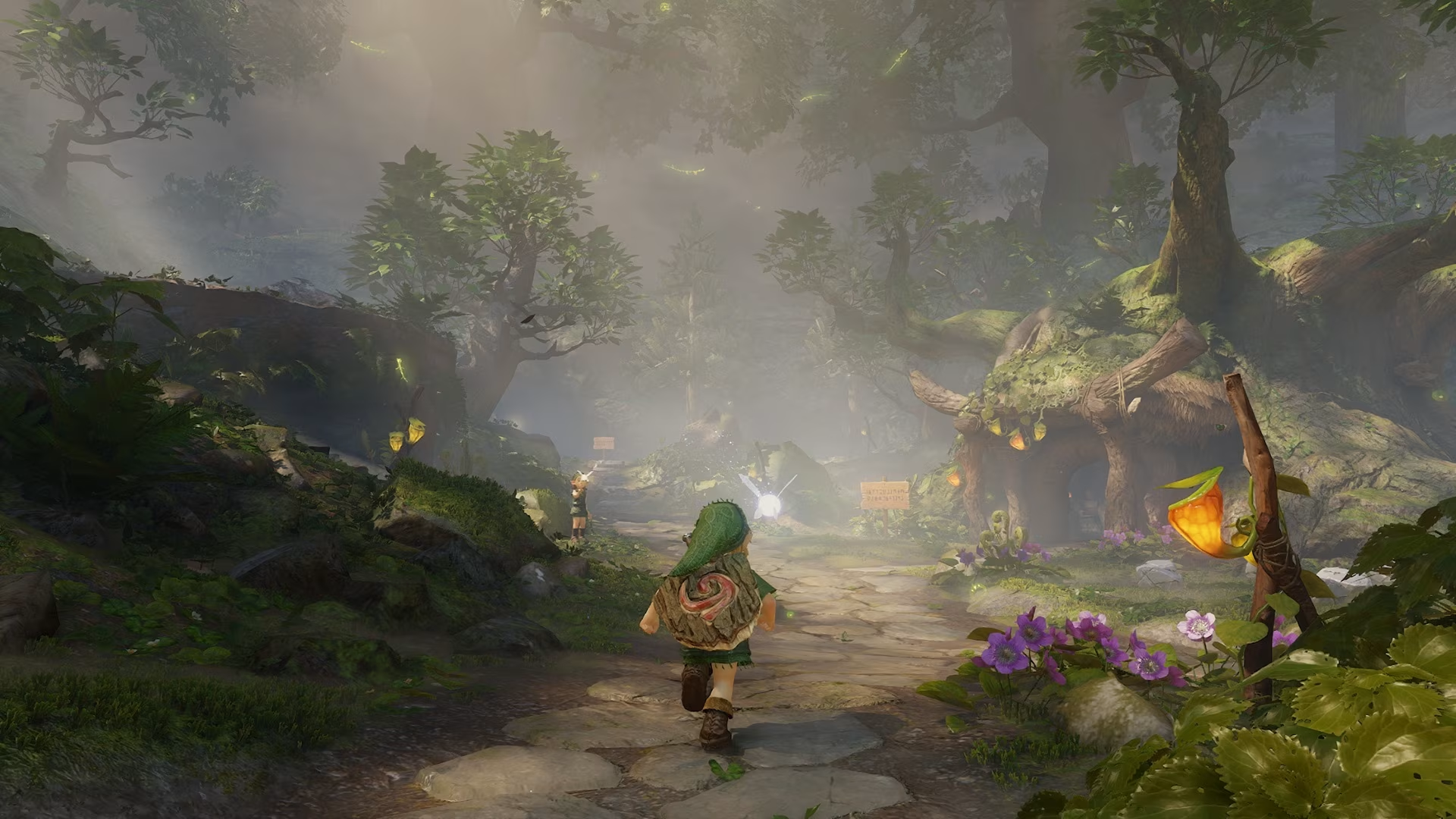
If you’re on the fence, it may be a good idea for you to preview the game if you can, and possibly play it as a family. I’ve always found puzzle-heavy games to be a fun experience with others, even if they’re not that into playing games. Sharing Ocarina of Time as a family may limit some of the frustration that a younger player may have with the more challenging aspects of the game. All while still allowing them to share a new game and create some fun memories.
Where Can I Play The Legend of Zelda: Ocarina of Time and How Much Does It Cost?
The Legend of Zelda: Ocarina of Time is available only on the Nintendo Switch 2 console and costs $69.99 physically or $59.99 digitally.
What is The Legend of Zelda: Ocarina of Time About?
Ocarina of Time begins as most Zelda games do: with Link (the hero) waking up. In this iteration, Link is a denizen of Kokiri Forest, a hidden town full of ageless children with guardian fairies. Link is different, though: He’s the only child without a fairy. Until he’s woken up by Navi, a mysterious and helpful fairy without a partner.
Starting with cleansing the corruption of the Great Deku Tree (the guardian of Kokiri Forest), Navi urges Link on a vast adventure across the land of Hyrule to save the kingdom from a dark future.
How Does The Legend of Zelda: Ocarina of Time Play?
The Legend of Zelda: Ocarina of Time is an adventure game dotted with themed dungeons and complex, unfolding puzzles. There’s also a fair bit of combat throughout the game, but I’ve always seen most encounters as puzzles in and of themselves.
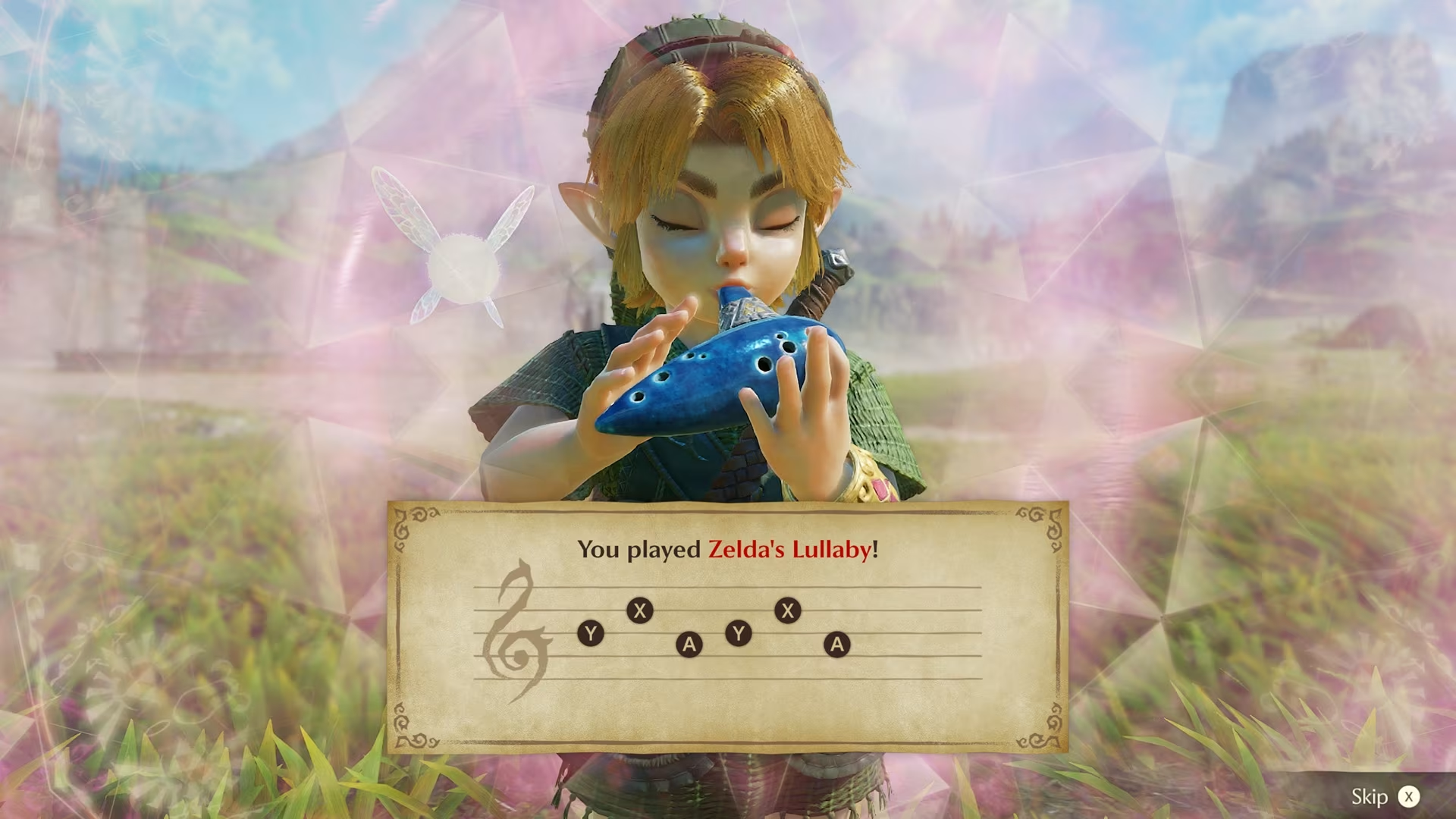
As Link, you and your kids will explore various biomes and environments in the open-ended Kingdom of Hyrule. While there’s plenty to do in the “overworld,” the meat of the game’s puzzles and challenges comes in “Temples” (AKA dungeons) scattered throughout the environment.
Each Temple has a theme corresponding to an element of the world; fire, water, forest, etc. Each dungeon includes layers of puzzles to solve and enemies to best… as well as unique items that allow Link to interact with the environment in a new way.
The starting town acts as a miniaturized loop of the structure of the full game, leading to the tutorial dungeon, The Great Deku Tree. In the beginning of the game Navi informs Link that the Deku Tree is sick. Thus, Link must enter the massive sentient tree to determine what’s wrong and try to fix it. Of course, the entrance to the Deku Tree is blocked by Mido. Mido is a rude bully. We do not like Mido.
He demands that Link find a weapon and shield to earn passage to the Deku Tree. You see, Mido thinks this will stop Link. Mido is not nice. We’ll show him…
This sends Link on a mini-adventure around the village to find the required items. As Link, you and your family will discuss with other children in the town, listen to rumors, visit shops, and solve puzzles to find exactly what you need, the Kokiri Sword and Deku Shield. How do you like that Mido!?
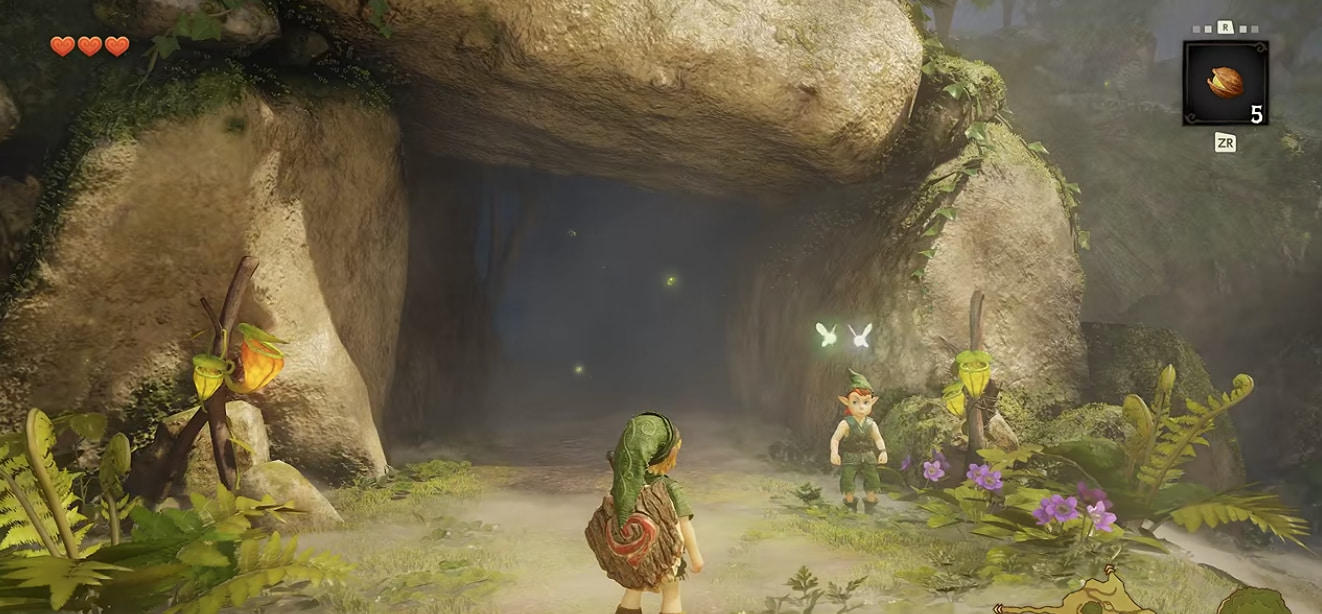
Once that self-important bully lets Link through, you and your kids can enter the Deku Tree. From there, Link will discover unique items (the Fairy Slingshot, a map, a compass, etc.), solve puzzles, and defeat baddies to progress through the dungeon. Once you hit the end, you and your kid will be confronted by a boss enemy.
This repeats in increasing complexity throughout the game.
While Temples are a huge part of the game and arguably some of the most visually distinct, there is also a large world to explore. The overworld stitches everything together, and features secrets, items, and puzzles as well. Many of these yield Rupees (i.e., money) and other important items (bottles, heart pieces to increase health, etc.). But some of these puzzles span the entire game and can yield powerful weapons and abilities. The key is exploration and thinking outside of the box.
What’s New in the Ocarina of Time Remake?
As mentioned, Ocarina of Time on Nintendo Switch 2 is a remake of the 1998 Nintendo 64 game. While it’s been rereleased and remastered over the years, this is a more comprehensive remake. The core of the game is very similar to the original, but changes have been made to modernize certain elements of the experience. The visuals will be most immediately noticeable, but some gameplay elements have been changed significantly too. For example, players now have full control over the camera, allowing for more precise control. Players can also now control when Link jumps, which in the original was an automatic action when running up to a ledge. Some areas of the dungeons have also been tweaked to help reduce some of the friction in puzzles.
While there’s plenty to do in the “overworld,” the meat of the game’s puzzles and challenges comes in “Temples” (AKA dungeons) scattered throughout the environment.
Become the Hero of (Screen) Time
No spoilers, but Link in The Legend of Zelda: Ocarina of Time is often referred to as the “Hero of Time.” But when it comes down to it… this is just a game. You can become the true Hero of (Screen) Time in your home with some simple tips and resources!
Whenever a parent asks me about appropriate video games for their kids I always start by recommending they check the ESRB rating information. Shocking, I know. The fact of the matter is the ratings provide a lot of information very efficiently. Most of the time, you’ll find that the assigned Rating Category, Content Descriptors, and Interactive Elements are more than enough to make an informed decision. However, sometimes you’ll want more information, and that’s OK too. If that’s the case, try running a quick search for videos and articles about the game in question. You can find previews, reviews, let’s plays, gameplay trailers, and more.
Of course, the best way to decide if a game is appropriate is to play it yourself. Some games even have demos so you can try them out before you decide whether a game is appropriate for your family.
If you’re still on the fence, talking with your kids about a game is often illuminating. Not only does this let them know you’re coming at this from a judgement-free perspective, but it also gives you the opportunity to talk to them about why they love their favorite games, what they’re looking forward to, and why household rules around video games matter. Kids are smart, and setting expectations around household rules is a shortcut to mutual understanding. Household rules often touch on appropriate games (based on the rating), screen time, online communications, spending, and more. If you’re not already familiar with video games and want some tips and conversation starters, visit ESRB’s Family Gaming Guide.
For Ocarina of Time specifically, individual puzzles can make for natural stopping points. Stopping mid-puzzle can be a tough pill to swallow, no matter how old you are (I speak from experience). Mutually agreeing with your kids to stop after completing a puzzle or besting a boss, can make screen-time parameters easier to enforce.
You may also want to back up those household rules with parental controls. Virtually every video game device includes the ability to activate parental controls. With these, you can manage what your kids play (based on the ESRB-assigned age rating), with whom (if anyone!) they can play online, when and for how long they can play, and whether they can spend money on new games or in-game purchases. Every device has a different process for setting parental controls, so visit ParentalTools.org for step-by-step parental control guides.
On Nintendo Switch 2, for example, you can use the Nintendo Switch Parental Controls app to set daily play-time limits, restrict games by ESRB rating, and manage with whom your kids can communicate (if anyone!), all from your phone. You can find that guide here.
Lastly, if you have any interest or curiosity about video games, you can turn it into a family activity. There are literally hundreds of games out there that are appropriate for all ages, and you may discover that these experiences can be more than “just fun.” The act of playing together lowers walls and opens the door to on-the-fly conversations. Maybe you’ll learn something new about your kids, and maybe you’ll gain a better understanding of the why behind their love of a specific game. But at the very least you’ll have fun as a family!