A Parent’s Guide to Once Upon A Katamari
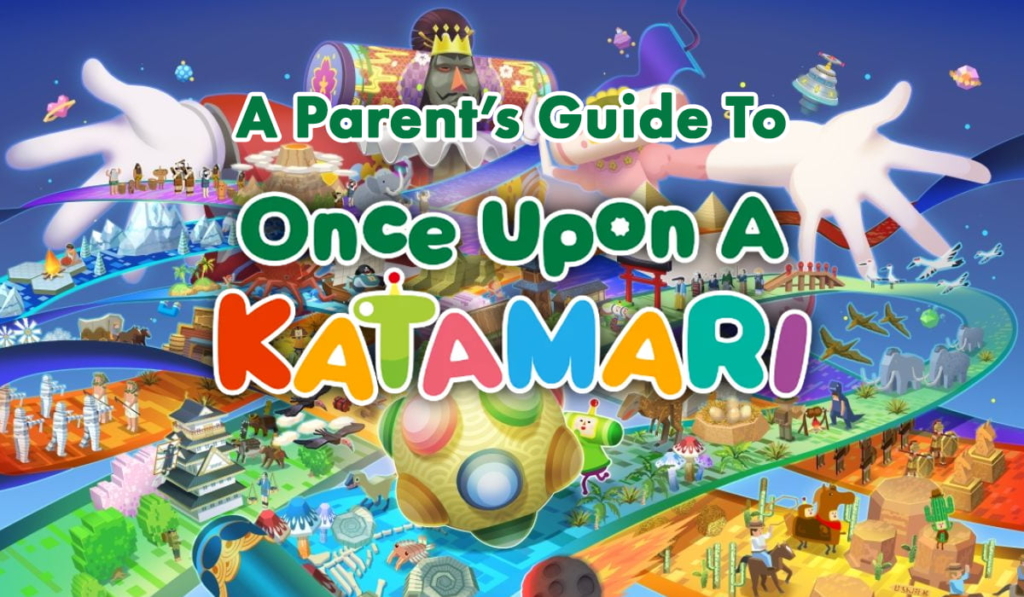
Once Upon a Katamari At a Glance
- Once Upon A Katamari is rated E for Everyone with Content Descriptors for Alcohol Reference, Mild Fantasy Violence, Use of Tobacco.
- The game is colorful, silly, and generally family friendly.
- Younger or sensory-sensitive kids may find the flashing visuals, fast music, sound effects, and timed challenges overwhelming during longer play sessions
2004 was the year that we were introduced to the world of Katamari Damacy when it was released on PlayStation 2. I remember it like it was yesterday, as it was an experience in gaming that I haven’t had before.
Since then, that blended style of a quirky, clean-up game with minimalist art direction and frantic humor has inspired several titles since. So, when we got a new entry into the Katamari franchise 14 years later, I couldn’t believe how fresh and fun it still felt. Better yet, this time I got to experience it with my kids, which made it all the better.
Is Once Upon A Katamari Appropriate for Kids?
Once Upon A Katamari is rated E for Everyone with Content Descriptors for Alcohol Reference, Mild Fantasy Violence, Use of Tobacco. These elements present themselves through the environments, NPCs (Non-Playable Characters), and occasional skippable dialogue.
This is an adventure that takes the player through several different eras, such as Edo Japan, the Wild West, Ancient Greece, and more. So, when you are playing through levels in the American Wild West, for example, you start off in a saloon where there are typically substances meant for adults. The main character is not drinking alcohol or using tobacco throughout Once Upon A Katamari. However, there are beer bottles and flasks lying around, as cowboys smoke around a campfire.
The game is colorful, silly, and generally family friendly.
Remember that ESRB ratings are not an indication of a game’s intended audience. Once Upon A Katamari is appropriate for all ages from a content perspective, but some younger players may find it too challenging.
I played through this game with both of my kids, who are 4 and 6 years old, and we had an incredible time together. They especially had fun making their own characters. The time-faring adventure also led to fun discussions about historical time periods. My 4-year-old, who was primarily watching, had just as much fun as my 6-year-old who was taking turns playing the game with me.
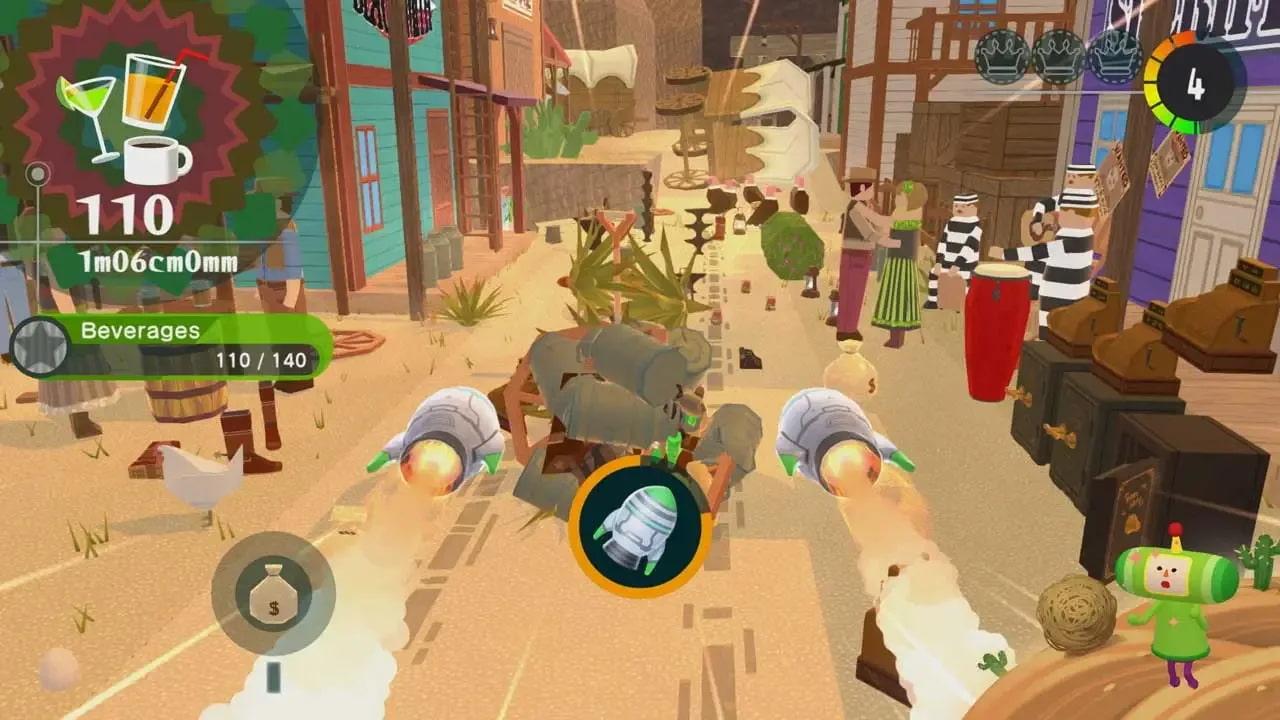
We did find that the stimulating sounds and visuals, as well as the stress of the time-based challenges became a little overwhelming. Fortunately the fix was simple: we capped out play time together to 30-minutes at a time.
Where Can I Play Once Upon A Katamari and How Much Does It Cost?
Once Upon A Katamari is available for the XBOX Series X|S, PlayStation 5, Nintendo Switch, and PC for $39.99. There is also a Digital King of All Sounds Edition available for $59.99 that includes:
- The base game
- 60 song tracks
- 26 costumes from past entries in the series
Once Upon A Katamari does have an optional online multiplayer mode that requires an internet connection to play, as well as an XBOX Game Pass Essential (or higher) or a PS Plus Essential (or higher) subscription when playing on console. Both subscriptions start at $9.99/month, with various tiers and corresponding price points beyond that.
What Is Once Upon A Katamari About?
The King of the Cosmos is back and causing chaos yet again, leaving it up to the Prince (you) to clean up the mess. While using a magic scroll, the King accidentally destroys everything in the universe.
Tasked with restoring the stars, you and your kids will take control of the Prince (or one of the 68 different “cousins”) to roll Katamaris throughout time and remake the stars.
How Does Once Upon A Katamari Play?
Once Upon A Katamari maintains the tried-and-true formula that has made the franchise successful all these years, while adding streamlined control options for new players.
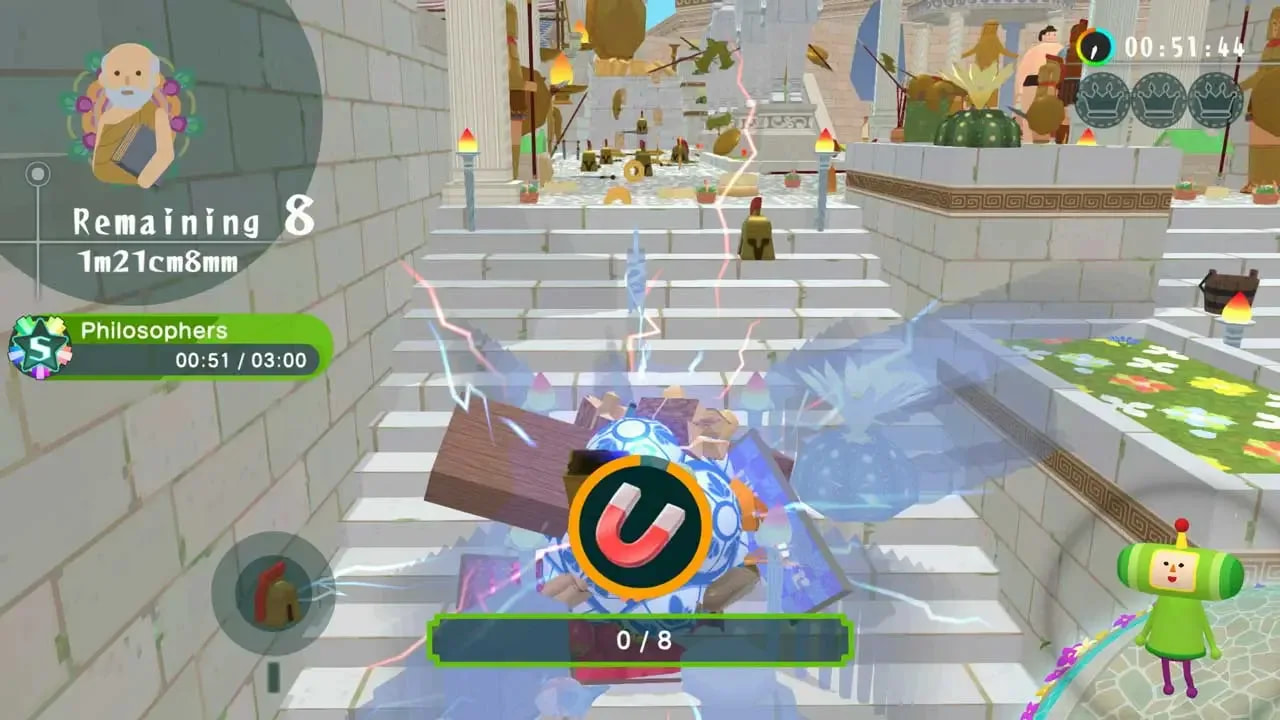
Each level essentially operates the same. You are dropped into a chaotic environment, strewn with random objects of all shapes and sizes. You and your family will roll the Katamari around the level picking up the mess along the way. The more you pick up, the larger the Katamari gets allowing you to collect larger items, and so on.
There are various final objectives that complement this gameplay loop, such as collecting a certain amount of a specific item, growing to a certain size within time limits, and finding certain objects within the level, like the King’s crown and the Prince’s missing cousins. The multiplayer mode, Celestial 4-Player KatamariBall, builds on this formula by adding other players into the mix. Celestial 4-Player KatamariBall can be played either online or offline with friends or CPUs. This mode pits players against each other to see who has the best strategy, who can clean the most and the fastest, all while maintaining the same frantic gameplay and game-changing power-ups.
How to Keep your Kids’ Katamari Rolling Appropriate
Checking the ESRB rating is a great place to start, but there are other steps parents can take to make sure all their kids’ video game experiences are appropriate.
If any content in the game sparks questions, ESRB’s Family Gaming Guide is a great resource for helpful tips to learn more and start conversations around appropriate video game play. From picking appropriate games, to establishing household rules, there are lots of resources you can embrace as a parent, and as a family.
And if you want to ensure your kids are only accessing age-appropriate content across their devices and consoles, check out ESRB’s step-by-step parental controls guides at ParentalTools.org to help you get started!
 Asa Bebout-GreenRiver is a seasoned gaming and entertainment industry professional, who has worked in various areas of the industry like consultation, news coverage, development, and more. He’s worked with companies like IGN, Take This, and The Game Awards, and has worked on titles like Weird West and Onson Master. He’s a passionate advocate for diversity, equity, and inclusion, and has produced content focused on promoting Indigenous representation in the gaming and entertainment industry with companies like Twitch, Kinda Funny, and Snapdragon. Aside from this experience and his work in marketing, Asa is developer of an up & coming tabletop game called, BattleVersus! which was recently featured in the SixOneIndie Showcase.”
Related Articles
A Parent’s Guide to Mina the Hollower
A Parent’s Guide to MARVEL Tōkon: Fighting Souls