A Parent’s Guide to Marvel’s Wolverine

Like Wolverine, I’m the best at what I do. But unlike Wolverine, what I do is very nice! And to be clear, I help parents decide which video games are appropriate for their kids.
Despite being developed by the same studio as Marvel’s Spider-Man games, Marvel’s Wolverine takes a comic-accurate approach to the titular character’s more violent nature. Many may be expecting Wolverine to have a similar approach to are-appropriateness… but that’s not the case.
We’re here to give you a closer look at the game, the ESRB rating, and what to expect so you can make a more informed decision about whether Wolverine is appropriate for your family.
What is Marvel’s Wolverine Rated?
Marvel’s Wolverine is rated M for Mature, with Content Descriptors for Blood and Gore, Drug Reference, Intense Violence, Partial Nudity, Strong Language. The rating also includes an Interactive Element for In-Game Purchases.
According to ESRB’s Rating Summary, “players use their claws to slash, stab, and slice enemies,” with dramatic, slow-motion finishers punctuating some elements of combat. Note that the game also includes dismemberment, with battlefields “sometimes strewn with torsos and limbs.” Marvel’s Wolverine also includes some partial nudity, described as a handful of sequences briefly depicting “a character’s exposed buttocks.” As well as some drug references and language.
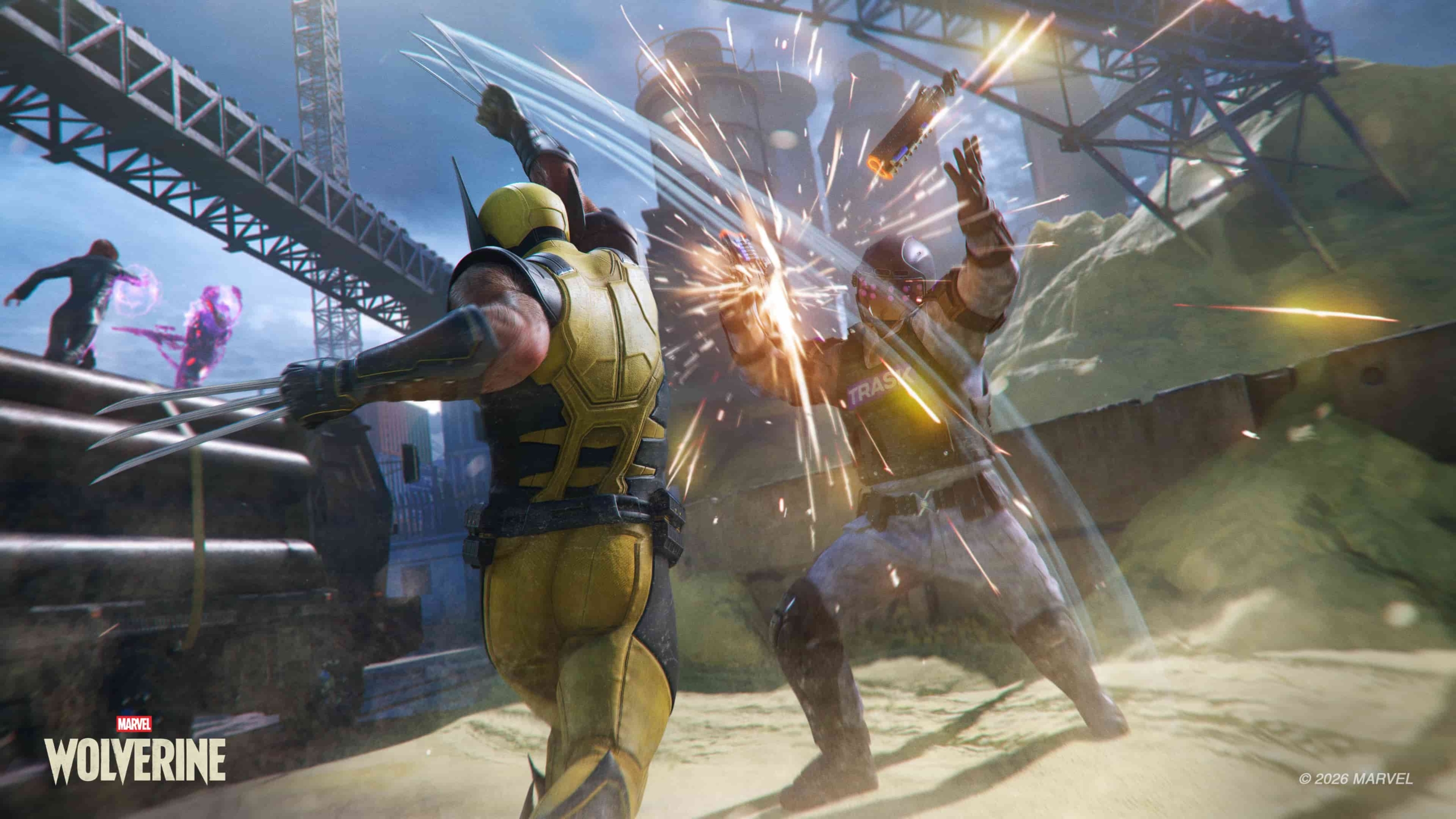
Counter to what some may expect from a game based on a comic book character, the rating indicates that Marvel’s Wolverine is generally not appropriate for kids under the age of 17 from a content perspective. However, Wolverine’s developer, Insomniac Games, included a handful of settings to manage some of the content. These settings allow you to customize the level of violence to a degree, including reducing the level of blood, dismemberment, and visible physical damage to Wolverine. Of course, this does not extend to the other aspects of the game, including the cited language, drug references, etc.
Remember that ratings are assigned based on the content of a game and the context in which it is presented to the player. It has nothing to do with playability or difficulty! Insomniac also included a suite of difficulty options for younger or less experienced players. These include enemy health, reducing enemy damage, assistance with dodging and parrying attacks, and more.
If you’re still on the fence, we have more information to help you decide.
How Much Does Marvel’s Wolverine Cost and Where Can I Play It?
Marvel’s Wolverine is available on the PlayStation 5 and costs $69.99 for the standard edition, both physically and digitally. There is also a Digital Deluxe edition for $79.99 and includes:
- The full game
- 5 suits
- 5 claws
- 4 Technique Points
You do have the option to purchase the Digital Deluxe upgrade later for $10.00 via the PlayStation Store.
these settings allow you to customize the level of violence to a degree including reducing the level of blood, dismemberment, and visible physical damage to Wolverine
What is Marvel’s Wolverine About?
Marvel’s Wolverine joins Logan (Wolverine himself) before the formation of the X-Men, and after his self-imposed “hiatus” from his mutant task force, Team X.
But of course, something sucks him back in.
Someone is kidnapping mutants, including people that are important to our titular hero. Wolverine is persuaded to rejoin Team X, along with Mistique, Sabretooth, and others, to liberate the captured mutants and put the ongoing threat to rest.
How Does Marvel’s Wolverine Play?
Marvel’s Wolverine is an action-adventure game where players will primarily proceed by using brutal mele combat to battle hordes of foes with Wolverine’s signature adamantium claws.
Players will progress through the story-focused game by engaging foes, completing objectives, and communicating with allies during in-game downtime. While the bulk of the minute-to-minute gameplay sees Wolverine cutting through waves of enemies, there are also moments of quiet.
As implied by the Rating Summary, combat in Marvel’s Wolverine hinges on fast paced, bloody fisticuffs. Players will proceed through dozens of enemies, including humans, cyborgs, and robots to reach his objectives. The combat is largely combo based, meaning players will input specific button presses to influence how Wolverine approaches a situation. This includes the ability to dodge projectiles and parry incoming attacks, leaving enemies vulnerable to a barrage of “snikt-ing” claws.
Players can also approach many combat scenarios with stealth first, allowing them to pick off enemies silently. But once Logan is noticed, the full breadth of the combat will unfurl. The more Wolverine kills, the more his rage magnifies, allowing him to use special attacks and eventually enter a state of “hyper-efficient killing.”

As players defeat enemies, Wolverine will gain experience points to level up. Each level rewards the player with Technique Points, which can be invested in new abilities, power ups, and more. Experience and upgrades can also be earned by exploring, uncovering collectibles, and crafting new suits.
Players will also unlock alternate suits based on some of Wolverine’s most famous comic book and cinematic adventures.
Entering Your Safety Berserker Rage to Keep Your Kids’ Video Games Appropriate.
Mutant powers aren’t real… yet… but you can take simple steps to make it seem like your mutant power is creating appropriate video game experiences for your kids.
It’s always a good idea to start by checking a game’s ESRB rating. Bub. Parents tell us that in a lot of cases the ESRB rating is more than enough to decide, but depending on the age of your kids, you may want to dig deeper.
Fortunately, many games offer demos, which is often the best way to really see if a game is an appropriate fit for your family. If not, there are no doubt dozens of previews, let’s plays, trailers, and reviews online to peruse.
Setting reasonable boundaries is also essential, especially if your kids are interested in online games. Approach your kids in a judgement-free conversation to uncover exactly why they play the games they do. This will signal to your kids that you’re on their side and respect what they care about! Meanwhile, it gives you the chance to establish firm household rules around what they can play, when and for how long, with whom, and whether they can spend money on new games or in-game purchases. Curious about where to start? Check out our Family Gaming Guide for some tips and conversation starters.
Lastly, you can back up all of those household rules with parental controls. These are available on virtually every device that plays video games, including phones, tablets, and computers. Visit ParentalTools.org for step-by-step guides to set parental controls on your kids’ consoles.
Related Articles
A Parent’s Guide to Mina the Hollower
A Parent’s Guide to MARVEL Tōkon: Fighting Souls